0:00
hi welcome to my channel I'm your host G
0:04
and today I'd like to talk about
0:06
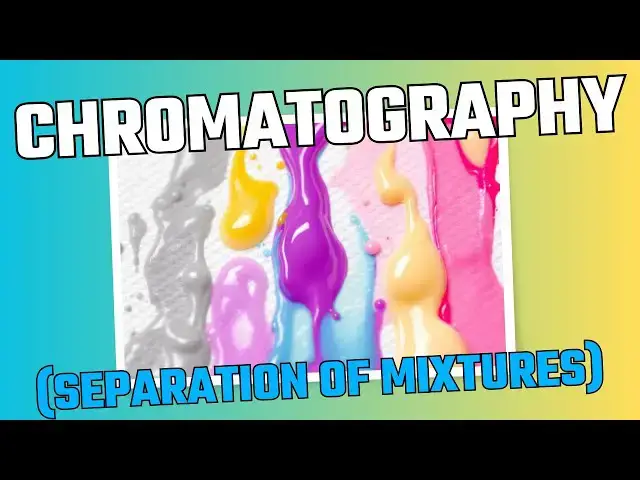
chromatography simply put chromatography
0:09
is like a chemical racetrack where
0:10
different molecules run at different
0:12
speeds through a medium causing them to
0:14
separate from each other it's based on
0:16
how strongly these molecules stick to or
0:18
move through different materials you
0:20
know I love explaining this to my
0:22
students using a pizza analogy imagine
0:24
you spill different sauces ketchup
0:27
mustard and mayo on a paper towel you
0:30
notice each saw spreads differently some
0:32
travel further others barely move that's
0:35
exactly what's happening in
0:36
chromatography the paper towel is our
0:38
stationary phase and gravity pulling the
0:40
sauces down is like our mobile phase
0:43
each sauce or in real chromatography
0:45
each molecule has its own personality
0:47
that determines how fast it travels the
0:50
main types of chromatography are paper
0:52
thin layer gas and liquid chromatography
0:55
each type uses different materials and
0:57
methods to separate mixtures kind of
0:59
like how you might sort laundry using
1:01
different methods color material or
1:03
temperature requirements I tell my
1:06
students it's like different types of
1:08
Transportation paper chromatography is
1:10
like walking simple but effective thin
1:13
layer chromatography is like riding a
1:15
bike faster and more efficient gas
1:17
chromatography is like flying super
1:20
quick but needs special equipment and
1:22
liquid chromatography is like taking a
1:24
train reliable and can handle heavy
1:25
loads each has its own tickets and
1:28
routes if you will the station
1:29
stationary phase is a fixed material
1:31
that stays put while the mobile phase is
1:33
a fluid that moves through it carrying
1:35
the mixture we want to separate they
1:37
work together like a security checkpoint
1:39
in a moving crowd think about going
1:41
through airport security the security
1:44
checkpoint is like our stationary phase
1:46
it stays in one place the people moving
1:48
through are like our mobile phase some
1:50
people like those with lots of metal
1:52
items get stuck at security longer while
1:55
others zip right through that's exactly
1:57
how molecules interact with our phases
2:00
some molecules are like the person with
2:01
three laptops and metal jewelry they're
2:03
going to spend more time with security
2:05
While others are like the person
2:07
traveling with just a phone they'll get
2:09
through much faster chromatography is
2:11
used everywhere from drug testing and
2:13
forensics to food safety and
2:15
environmental monitoring it's the goto
2:17
method when we need to know exactly
2:19
what's in a mixture whether it's
2:20
detecting performance enhancing drugs in
2:22
athletes or ensuring your food coloring
2:24
is safe here's a wild thought you know
2:26
those CSI shows everyone loves when
2:29
they're analyzing evidence they're often
2:30
using chromatography it's like being a
2:33
molecular detective we can use it to
2:35
check if your sport strength actually
2:36
contains what it claims or if that new
2:38
perfume is authentic or fake one of my
2:41
favorite examples to share with students
2:42
is how chromatography helps solve a
2:44
famous art forgery Case by analyzing the
2:46
paint pigments it's literally separating
2:49
fact from fiction the main factors
2:51
affecting chromatographic separation are
2:53
temperature solvent Choice flow rate and
2:56
the quality of the stationary phase
2:58
these variables are like like the rules
3:00
of the game that determine how well our
3:02
molecular race plays out you know it
3:04
reminds me of making the perfect cup of
3:06
coffee stay with me here think about how
3:09
different your coffee tastes depending
3:10
on the water temperature how fast you
3:12
pour it what kind of filter you use and
3:14
even how finely ground the coffee is all
3:17
these factors affect how the flavors are
3:19
extracted just like in chromatography
3:21
change any of these conditions and boom
3:23
you get different results I once had a
3:26
student completely mess up their
3:27
experiment because the lab was too cold
3:29
the molecules were moving like they were
3:31
stuck in molasses and by the way if you
3:33
are enjoying the video so far do me a
3:36
quick favor hit that like button it
3:38
really helps support the channel and it
3:41
only takes a second chromatography can
3:44
identify unknown substances by comparing
3:46
their behavior to known standards run
3:48
under the same conditions it's like
3:50
having a fingerprint database for
3:51
molecules we can match the unknown
3:53
substances travel pattern to known
3:55
compounds it's exactly like being a
3:58
detective at a high school dance let's
4:00
say you find a mysterious footprint and
4:02
Spilled punch to figure out who made it
4:04
you compare it to the shoes of everyone
4:06
at the dance under the same conditions
4:08
same floor same punch that's what we do
4:11
in chromatography we run our mystery
4:13
molecule alongside known substances and
4:15
say aha this unknown compound traveled
4:18
exactly like caffeine did and just like
4:21
that mystery solved the RF value is
4:24
simply a ratio between how far a
4:26
substance travels compared to how far
4:28
the solvent travels it's always between
4:30
zero and one and it's like a molecule's
4:32
personal speed score in our separation
4:34
race picture this your timing students
4:37
running a 100 m Dash if the fastest
4:40
student let's call him the solvent runs
4:43
100 m and your molecule runs 60 m in the
4:46
same time your RF value would be 0.6
4:49
easy peasy I always tell my students if
4:52
you can divide you can calculate RF
4:55
values and the cool thing is under the
4:57
same conditions a compound will always
4:59
have the same RF value it's like their
5:01
chemical social security number
5:03
chromatography is fantastic because it's
5:05
precise versatile and can separate
5:07
complex mixtures without destroying them
5:10
however it can be timec consuming
5:12
expensive for some types and requir
5:14
skilled operators to get reliable
5:16
results let me break this down like I do
5:18
for my AP cim class the advantages are
5:21
like a Swiss army knife it can do almost
5:23
anything when it comes to separation but
5:25
the limitations are like having a
5:27
Ferrari amazing capabilities but
5:29
expensive to maintain and you need
5:30
training to use it properly I always
5:33
joke with my students that some forms of
5:34
chromatography are like having a
5:36
$100,000 machine to separate red and
5:39
blue M&M's but when you need to analyze
5:41
blood samples or ensure drug Purity that
5:44
Precision is absolutely worth every
5:45
penny if you're looking for exercises to
5:48
test your knowledge there is a link in
5:50
the description for you thanks for
5:52
sticking around till the end if you
5:54
enjoyed the video so far and want to see
5:56
more content like this make sure you hit
5:58
that subscribe button thanks for